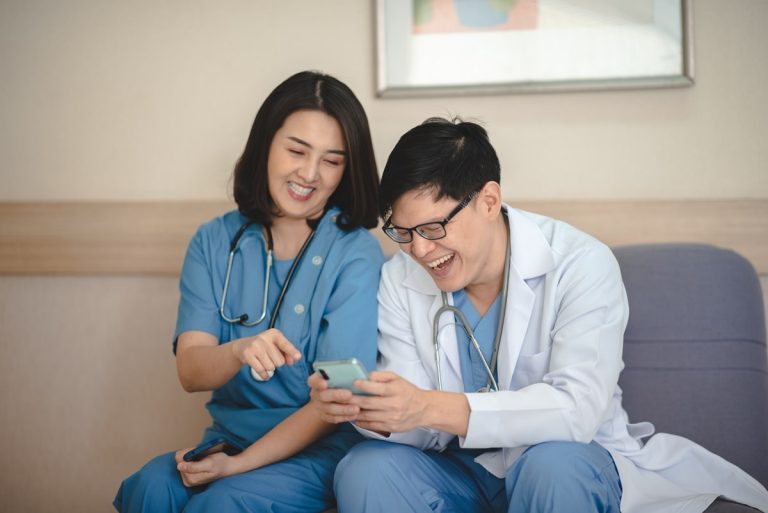

GastroGenius Challenge App offers a different entry point into gastroenterology education.
Rather than presenting content in a traditional academic format, it uses short, game-based interactions to efficiently reactivate stored clinical knowledge.
This approach aligns with established findings in medical gamification research:
brief repetition, intrinsic motivation, immediate feedback, and light cognitive engagement can strengthen retention without increasing workload.
The app is not a substitute for clinical guidelines or formal training, but a complementary tool that helps clinicians keep core gastroenterology concepts accessible during routine clinical work.
Reactivating Stored Clinical Knowledge Through Gamified Recall
Educational studies consistently demonstrate that gamified recall can re-engage clinical knowledge that is not used daily.
Brief, repeated retrieval strengthens long-term retention and facilitates faster access to relevant clinical information.
GastroGenius applies this mechanism in a structured, game-based format.
Instead of introducing new content, it triggers the recall of existing GI knowledge — guidelines, diagnostic criteria, and therapeutic sequences — that may have become less accessible over time.
This retrieval process, widely discussed in gamification medicine research, operates automatically during each round and contributes to maintaining clinical readiness.
Short, Consistent Recall That Strengthens Retention
Educational research shows that brief, repeated exposure to clinical concepts, especially in a low-pressure, high-engagement format, helps maintain long-term accessibility of knowledge.
This form of repetition does not rely on scheduled study sessions, but on short, frequent recall moments that strengthen memory pathways over time.
GastroGenius Challenge App naturally applies this principle.
Its structure — short rounds, concise questions, and spontaneous micro-sessions — creates consistent retrieval opportunities throughout the day.
These repetitions integrate easily into busy clinical routines, helping clinicians stay connected to:
- diagnostic algorithms
- endoscopic decision-making
- the underlying logic of GI and endoscopy guidelines
Intrinsic Motivation: A Core Mechanism in Gamified Learning
Research on gamified learning in medicine highlights intrinsic motivation as a central factor in effective knowledge reinforcement.
When participation is voluntary rather than mandatory, clinicians engage more frequently and with lower cognitive load.
GastroGenius incorporates this principle by avoiding mandatory modules or formal progression.
Instead, it encourages brief, self-initiated interactions that fit naturally into everyday clinical workflows.
This voluntary engagement — even during short moments between tasks — is one of the mechanisms shown to reinforce technical clinical knowledge without adding structured study pressure.

Immediate Feedback as a Reinforcement Mechanism
Educational research consistently identifies immediate feedback as one of the most effective tools for consolidating clinical knowledge.
Quick confirmation strengthens accurate mental models, while gentle correction supports adaptation without the stress of formal assessment.
GastroGenius integrates this principle through short, structured feedback loops.
Each interaction provides:
- immediate confirmation
- clarification of overlooked concepts
- neutral, low-intensity guidance
This type of micro-feedback has been shown to improve durable recall and support real-world clinical reasoning.
How Peer Interaction Enhances Engagement
Studies in medical gamification show that low-pressure peer interaction increases engagement and supports sustained learning.
GastroGenius Challenge App applies this principle by connecting gastroenterologists and trainees through shared challenges and leaderboards.
Because participants operate within similar diagnostic frameworks and endoscopic pathways, the interaction remains clinically meaningful and professionally relevant.
This collegial comparison encourages voluntary, repeated engagement while preserving a focused and respectful learning environment.
A Complementary Tool Within Gastroenterology Education
Medical education research emphasizes that gamified learning is designed to complement, not replace, formal education.
This principle defines GastroGenius Challenge App.
The app does not substitute:
- guideline study
- CME programs
- hands-on endoscopy training
- congress participation
Instead, it offers brief, low-effort reinforcement of existing clinical knowledge through structured recall and immediate feedback.
Integrating Low-Intensity Learning Into Everyday Clinical Life
GastroGenius Challenge is not designed to replace structured medical education.
Its value lies in delivering short, pressure-free learning moments that integrate naturally into daily life.
This approach aligns with evidence showing that voluntary recall helps keep knowledge accessible and clinically usable over time.
By complementing established learning pathways, GastroGenius Challenge App supports continuous clinical readiness in a format that is efficient, sustainable, and realistic for modern gastroenterology practice.